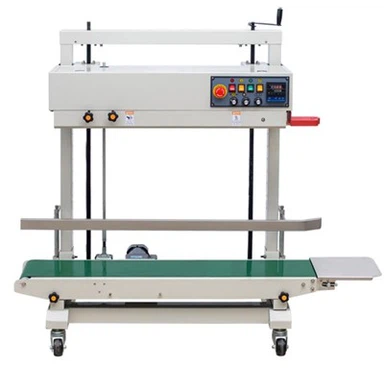

Why choose a fully automatic liquid packaging machine over a semi-automatic or manual filling machine?
May 21, 2026
Fully Automatic Liquid Packaging Machines: The Cornerstone of Efficient Production
When considering production requirements and scale-particularly in the context of large-scale manufacturing aimed at maximizing efficiency-a fully automatic, multi-functional liquid packaging machine clearly stands out as the superior choice. Designed specifically for mass production, these fully automatic systems integrate a comprehensive suite of functions-including bottle blowing, labeling, filling, and capping-to achieve a fully automated, closed-loop production process. This significantly reduces the reliance on manual labor, allowing production staff to step away from tedious, routine tasks and transition into supervisory and quality control roles. Furthermore, mechanized production minimizes the risk of errors inherent in repetitive manual labor, while the enclosed nature of the machinery prevents contamination associated with human handling, thereby guaranteeing the cleanliness and purity of the final product.
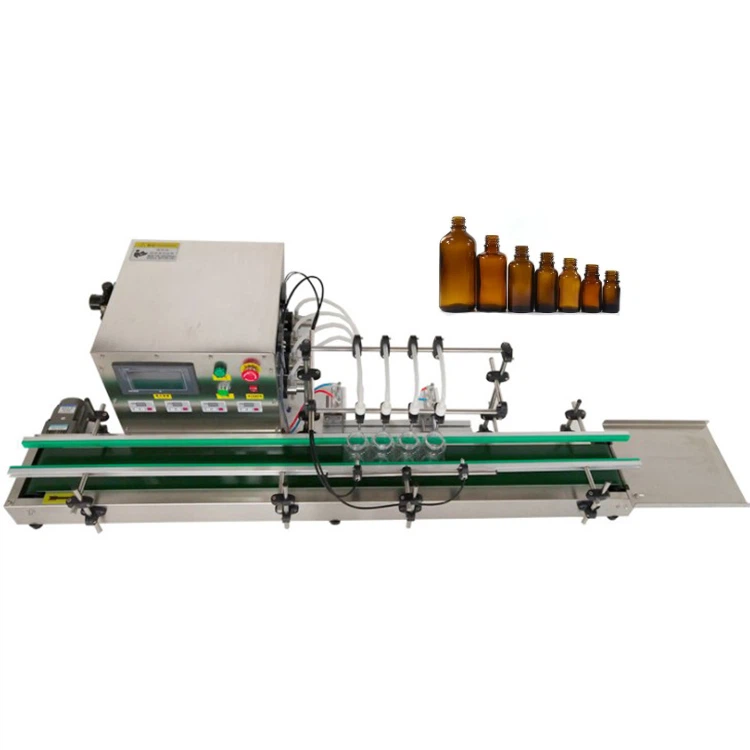
Why Are Semi-Automatic or Manual Filling Machines Unsuitable for Large-Scale Production?
First, one point must be made clear: semi-automatic and manual filling systems are designed for small-scale operations or artisanal workshops; their production efficiency simply cannot be compared to that of a fully automatic liquid packaging machine. To elaborate in detail, their primary disadvantages include:
1. Low Efficiency
A distinct drawback of low automation is the necessity for human intervention, which inherently operates at a lower pace. For instance, semi-automatic and manual systems cannot be seamlessly integrated with auxiliary equipment-such as bottle blowers, labeling machines, or conveyor belts. Consequently, manual labor is required for tasks such as positioning bottles, capping, and transferring products; this limits the overall filling speed and results in production delays.
2. Inability to Ensure Precise Volume Control
Precise volume control is of critical importance for both cost management and quality assurance. A machine's digital control system offers the ultimate in consistency-delivering an injection volume for every single product that is accurate down to the last drop. For manual filling, however, achieving this level of precision is simply beyond human capability. Even in semi-automatic systems where the filling volume per bottle can be regulated, the manual handling required to move bottles between stages can still result in a certain amount of product loss.
3. Product Waste Due to Spillage and Leakage
As mentioned in the previous point, semi-automatic and manual systems cannot fully guarantee precise control over the liquid volume dispensed into each bottle. Moreover, human error-such as accidental double-filling or a failure to stop the filling process in time-can lead to product overflow and spillage. This not only results in financial loss but also contaminates the production line itself-a scenario that constitutes nothing short of a disaster for beverage packaging lines, where maintaining absolute cleanliness is paramount.
4. High Error and Defect Rates
Since manual filling is subject to numerous variables, semi-automatic or manual filling methods cannot guarantee a low and consistent error rate, resulting in increased time and financial costs.